
RYOL
Life from the Corner of My Room
15 February - 5 April 2026
Srisasanti Gallery is pleased to present Life from the Corner of My Room, a solo exhibition by RYOL. Marking RYOL’s first solo exhibition with the gallery, Life from the Corner of My Room sets a return of his solo exhibition in Indonesia since 2020, featuring his latest body of works.
The exhibition signifies an ongoing artistic process that remains central to RYOL’s practice. Much of his childhood was spent within the comfort and confines of his room. In its quiet enclosure, his attention gravitated toward spaces that resisted usefulness or visibility: the underside of tables, the space above cupboards, and the corners where rooms seemed to recede. These marginal zones gradually became places where his imagination took root and flourished. Drawing from this experience and spatial relationship, the exhibition’s title reflects how imagination, in RYOL’s practice, emerges from the liminal and the easily dismissed, where imagination takes hold not despite its insignificance, but because of it.
The works in this exhibition serve as accumulations of images inspired by pop culture—visual languages that shaped the artist’s upbringing. RYOL introduces a recurring set of elliptical, geometric forms that resemble water droplets or capsules. Through these simplified shapes, he seeks to evoke sensation rather than representation, using abstraction to shift attention away from appearance and toward feeling. Form, in this context, becomes a vessel for lived and felt experience rather than a tool for visual description.
Life from the Corner of My Room invites viewers to reconsider the quiet intimacy of overlooked spaces and the subtle ways they shape perception and memory. RYOL traces how imagination can grow from the most unassuming corners of daily life. The exhibition becomes an open field where sensation, recollection, and play converge—suggesting that meaning often emerges from what is peripheral, fleeting, and gently held at the edge of attention.

Liffi Wongso
Odyssey: Hearth and Mire
6 December 2025 - 18 January 2026
Srisasanti Gallery is pleased to present Odyssey: Hearth & Mire, a solo exhibition by Liffi Wongso.
A place where fire is kept inside a home, the hearth, suggests a familiar feeling of being inside or indoors, surrounded by warmth. Mire, on the other hand, brings to mind the bodily sensation of soil or mud. Its heaviness, its cling, its dampness, and the feeling of being outside. The exhibition title is held together by the idea of an odyssey, pointing out Liffi’s introspective journey through an internal terrain, seeking wonder in the unnoticed ordinary that lingers between comfort and unease.
Drawing inspiration from ancient Western fairy tales and folklore, Liffi’s works depict hybrid flora, almost like botanical illustrations placed in overlapping layers. Flowers, leaves, and fungi grow freely, while vines and branches twist and turn. Within the abundance, slender figures with elongated limbs inhabit and blend with the compositions, merging with roots and petals around them, woven into it.
Liffi explores the myth of elves in Icelandic and Faroese folklore, known as Huldufólk or the hidden people. They are supernatural beings that resemble humans in appearance and behavior, yet they inhabit a parallel world. Similarly, Liffi’s drawings are non-linear; they drift through the same in-between spaces. They don’t contain particularly great tales or tragedies; rather, they imply what happens in between or around them. Her figures are beings that exist but are ignored beyond our perception. Each work unfolds like an unseen story— overlooked, yet quietly captivating.

Fandi Angga Saputra
Pada Lingsa
27 September - 2 November 2025
Srisasanti Gallery is pleased to present Pada Lingsa, a solo exhibition by Fandi Angga Saputra. Through a series of new paintings, Fandi meditates on the fragile continuity of cultural traditions in contemporary life.
The title of Fandi Angga Saputra's solo exhibition this time, Pada Lingsa, is borrowed from a punctuation mark in the Javanese script. It is a mark “equivalent to a comma (as in a pause).” In the Indonesian language, the word koma also carries a dual meaning: A pause in thought (comma) or a temporary suspension of consciousness (coma). Fandi responds to a quiet but persistent phenomenon marked by a growing disconnection from culturally rooted ways of life. Cultural fl uency is often uneven; some possess deep knowledge, others only fragments. A diffuse process of forgetting is underway, quietly eroding our responsibility to remember.
Born in Lampung to a Javanese family, Fandi’s practice is deeply informed by Kejawen—a philosophy of harmony, balance, and acceptance. His works refl ect an inheritance shaped by migration and displacement, where tradition is carried not in soil, but in gestures, stories, and beliefs. Here in the exhibition, Fandi’s works do not attempt to present culture and tradition as something whole or complete. They suggest that they are already slipping from our view, as forgetting begins quietly. What he paints contains meaning and reference towards a specifi c culture, but he is not painting the rituals themselves. These forms draw from Javanese tradition and communal values, evoking rituals of offering, sharing, and the principle of gotong-royong (mutual cooperation).
At a time when modern life accelerates and rituals fade, Pada Lingsa calls for a pause: to look again, to listen, and to gather what risks being forgotten.

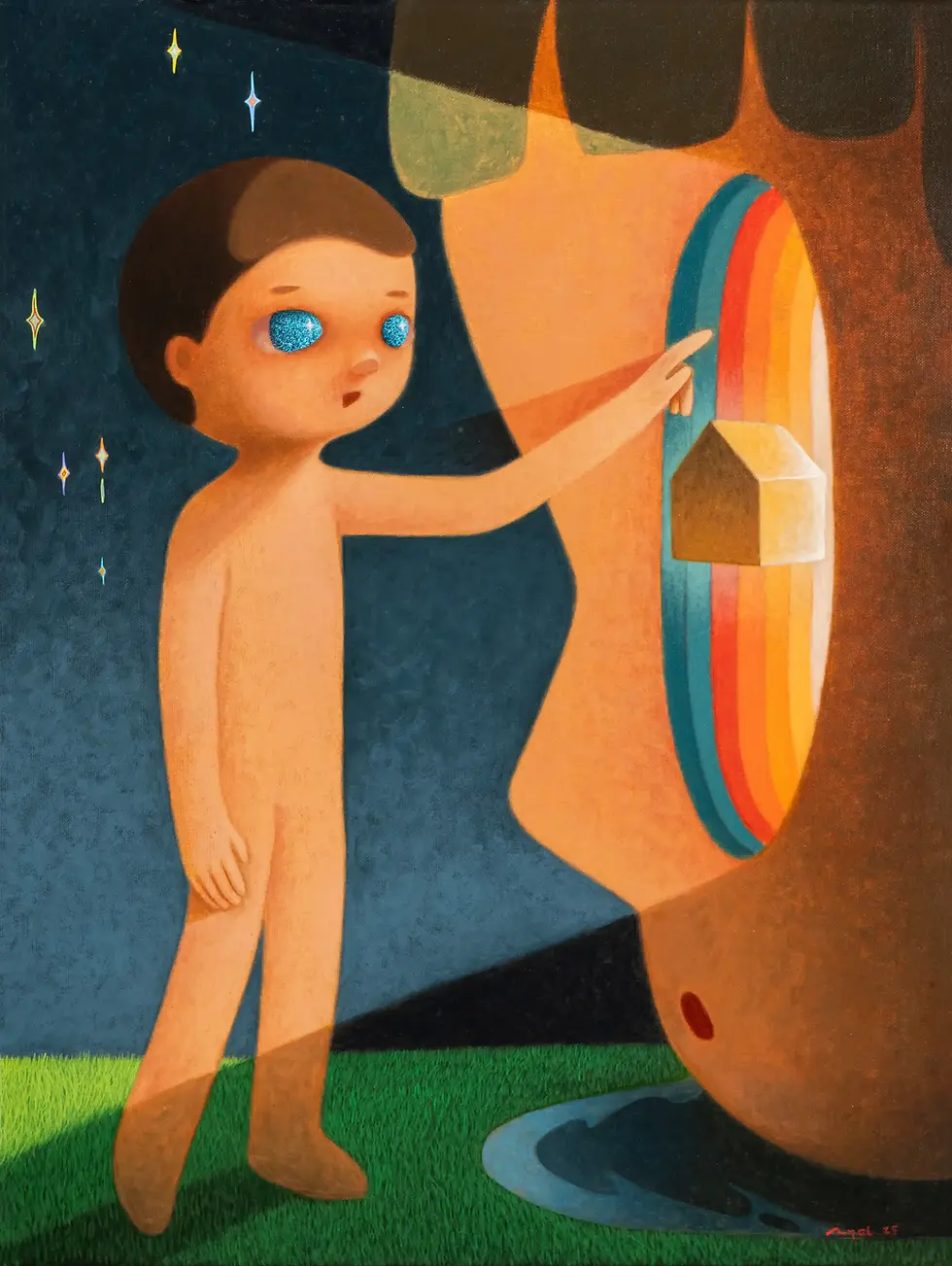
Art Jakarta 2025
Art Fair
3 - 5 October 2025

Norma, Forma
Group Exhibition
14 June – 10 August 2025

Eye of the Day
Group Exhibition
15 March – 4 May 2025

Goenawan Mohamad
Mencari Lagi...
22 February – 20 April 2025

Eko Bintang
(Un)certain Behavior
21 December 2024 – 9 February 2025

30th Srisasanti Syndicate
Group Exhibition
21 September – 24 November 2024

J. Ariadhitya Pramuhendra
Tears from Heaven
30 June - 11 August 2024

Made Wianta
Lupakan Wianta
8 Juni – 14 Juli 2024

Darbotz
Monstrous Mastery
2 March – 5 May 2024

e.g., i.e., etc
Group Exhibition
11 November 2023 – 28 January 2024

Sub-Values
Group Exhibition
8 July – 13 August 2023

Mahendra Yasa
Marga Abstrak
30 June – 30 July 2023

Addy Debil
Feeling Fluorescent
11 April – 14 May 2023

Agus TBR
Paradoxes
11 April – 14 May 2023

Kemalezedine
Kemalezedine’s Rerajahan: Deconsecrated Mantra
4 February – 19 March 2023

Works in Bali
Group Exhibition
11 November — 11 December 2022

Entang Wiharso
Double Horizon
9 July – 4 September 2022
.webp)
Heri Dono
Phantasmagoria of Science and Myth
15 October – December 2021

Roby Dwi Antono
Lucid Fragments
15 February – 28 March 2021

Heri Dono
Kala Kali Incognito
6 November 2020 – 3 January 2021
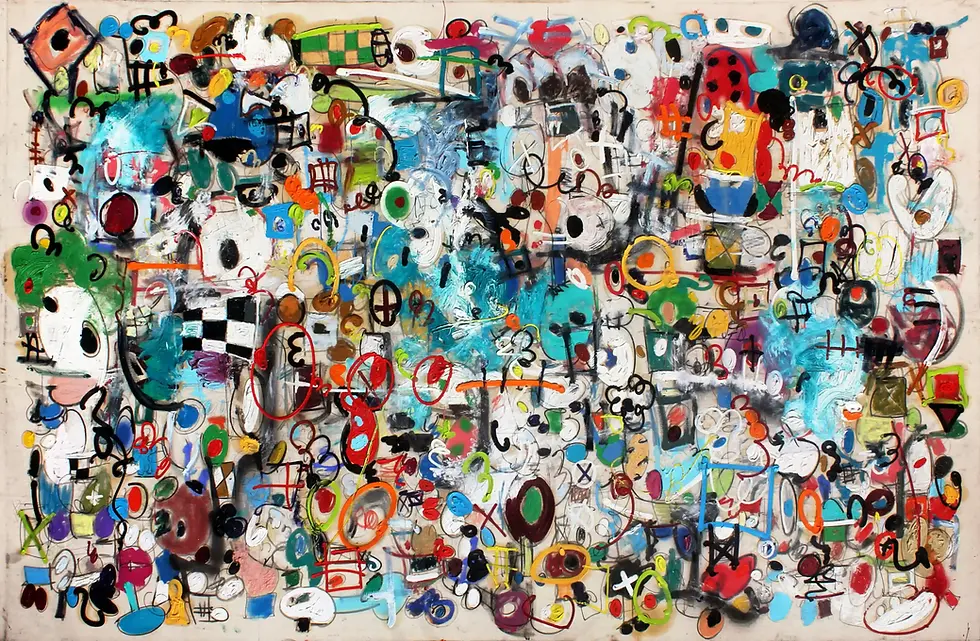
Alfredo Esquillo Jr.
The Circus of Life
11 September – 11 October 2020
